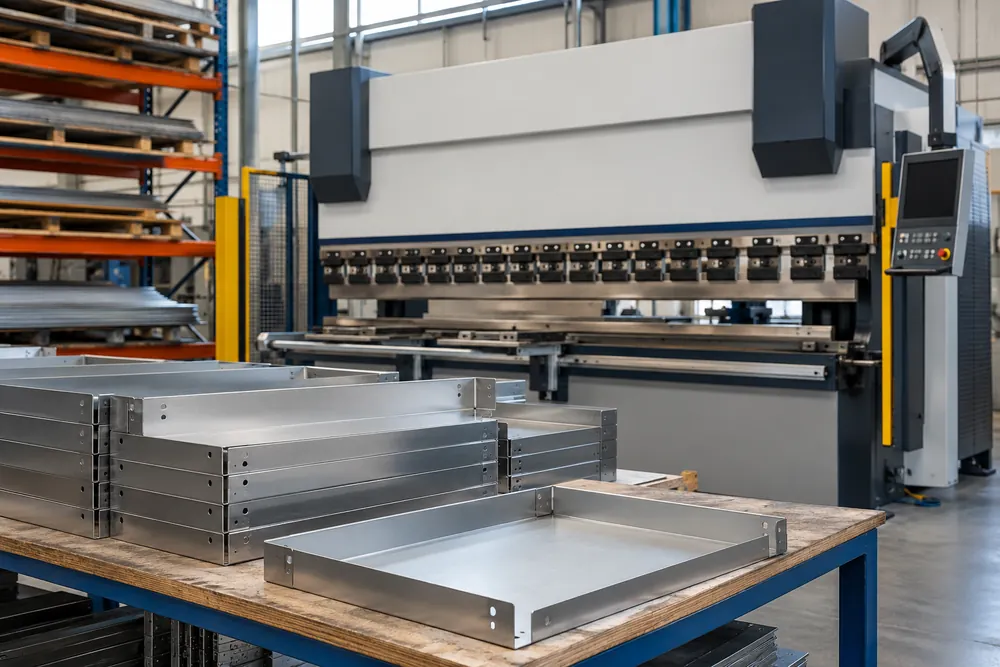
When Sheet Metal Is The Right Approach
Sheet metal fabrication creates components by cutting, forming and joining relatively thin material. Commercial uses include equipment covers, service panels, trays, duct-related fittings and housings for machinery or building services. Folding can add stiffness and useful returns without turning every component into a heavy welded assembly.
The right approach depends on the function, not simply the outline shape. A removable access panel must clear surrounding services and allow a person to reach its fixings. A tray needs consideration of drainage, edges and any contents. Tell us what the component contains or protects, how it will be mounted and who will maintain it.
Drawings, Flat Patterns And Bends
A drawing should show the finished part dimensions and identify material, thickness, bend directions and required radii. A flat cutting file can be helpful, but its bend allowances need to match the material and forming method. Do not assume a flat pattern created for one workshop or tool set will produce the same finished dimensions elsewhere.
Identify the faces that need a controlled appearance and mark holes that align with existing equipment. Features close to a bend may distort or become difficult to manufacture. Agree the dimensional reference points so that the fabricator knows whether a measurement is inside, outside or to a theoretical intersection. This prevents an apparently small interpretation difference becoming a fitting problem.
Material And Surface Requirements
Mild steel, stainless steel and aluminium sheet each have different forming behaviour and finishing options. Select the grade and thickness for the environment and required stiffness. A thinner sheet can sometimes gain stiffness from a return or fold, but a designer should approve changes that affect strength or performance.
Surface protection should reflect handling and installation as well as normal use. Cosmetic stainless panels may need a consistent grain direction and protection from contact damage. Powder-coated parts need clear coating and masking requirements. Identify contact faces, threaded features and earth connections that cannot simply be treated like the surrounding surface.
Enclosures, Access And Safe Edges
An enclosure needs more than a box shape. Consider removable panels, hinge movement, fastener access, ventilation and any required seal. If the housing is intended to achieve an environmental or electrical protection rating, that performance must be specified and assessed for the complete assembly. A folded enclosure is not automatically rated.
Specify edge treatment appropriate to handling and use. Hemmed edges, returns or other details may be needed where people can touch the part. For machinery guards, hole sizes, openings and fixings need reviewing against the actual hazard. A neat finish does not demonstrate that fingers or clothing cannot reach moving equipment.
Regulations And Workshop Controls
Press brakes, cutting machinery and other workshop equipment fall within the Provision and Use of Work Equipment Regulations 1998. HSE guidance addresses suitability, safe condition and the information and training required for users. These duties relate to the fabrication process, while the finished product may have additional requirements based on its use.
A panel used as a machine guard needs a safety review within the equipment assessment. A structural sheet component may instead fall within structural execution requirements. Welding or thermal cutting introduces fume risks that need assessment under COSHH. Tell us about the end use so the enquiry is not treated as a generic sheet cutting order.
How A Sheet Metal Order Develops
Start with a finished-part drawing, quantity, material and an explanation of the application. Confirm the dimensions that control fit and whether any existing fasteners or seals must be reused. Agree design queries, finish requirements and the drawing revision before the cutting and forming stage.
For a new repeat component, discuss approval of a first article before releasing the rest of the batch. This is particularly useful where several folds affect assembly fit. Inspection should follow the agreed drawing, including hole positions and cosmetic faces. Plan packaging so finished panels are protected from rubbing and distortion during delivery and storage.
What Changes The Quotation
Sheet utilisation, material thickness, cutting detail, bend count, tooling access and quantity all influence cost. Welding, dressing visible joints, inserting fasteners and applying a finish add operations. A series of small orders may also need more repeated set-up work than a clearly scheduled batch of the same component.
Supply the latest drawing and say whether a flat file is approved or only indicative. Identify required samples, checking fixtures, inspection reports and packaging. For parts that interface with other trades, ask who owns final dimensional approval. Discuss practical design adjustments before changing thickness or fold positions, since those changes can affect stiffness, access and the ability to fit the component.
Technical references: BSI structural execution standard, HSE welding guidance and HSE work equipment guidance.
Your Questions Answered
Do You Need A CAD File For Sheet Metal?
Sheet metal fabrication benefits from a dimensioned drawing and a suitable CAD file when available. A CAD outline alone may leave bend direction, material or finished dimensions unclear. Supply both the file and a drawing reference, and confirm whether the flat pattern is approved or needs developing for manufacture.
Can You Make A Small Batch?
Small-batch sheet metal fabrication can be scoped when the material, geometry and finish are clear. Quantity affects how cutting and forming are planned, so state the initial order and likely repeat requirement separately. If the design is new, agree whether a first component needs checking before the rest are made.