When Standard Parts Do Not Fit
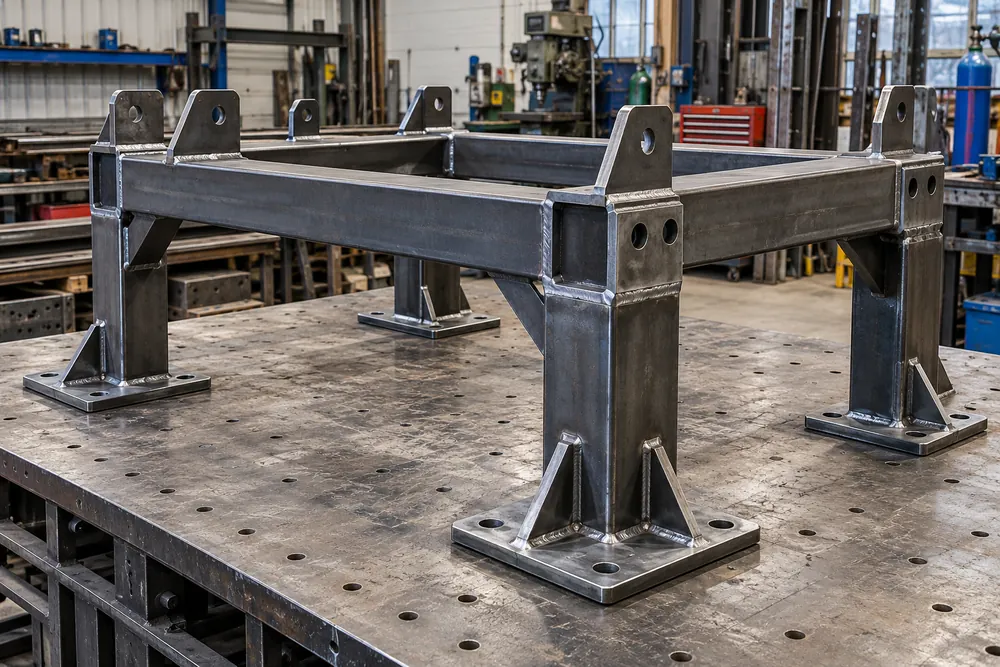
Bespoke steel fabrication is useful when a stock component cannot meet the required geometry, mounting arrangement or operating conditions. Typical commercial enquiries include machine support frames, unusual connection brackets, service supports and replacement assemblies for existing facilities. The aim is to define a component that fits the application and can be manufactured sensibly.
Start with the problem the part must solve. A photograph of a narrow access route or a description of maintenance tasks may be more useful initially than an elaborate sketch. Explain what the component supports, what it connects to and whether it must be removable. These details help identify the decisions needed before fabrication.
Survey The Interfaces First
One-off work often meets an existing floor, wall, machine or steel frame. Those interfaces should be measured from agreed reference points and checked for obstructions. Record where dimensions are uncertain and whether opening-up work or a site survey is needed. A drawing that assumes perfect right angles can be difficult to install in an older commercial building.
Think about the full route to the final position. Door widths, turning space, stairs, loading arrangements and restricted working hours can affect the assembly size. A split frame with bolted joints might be more practical than a welded item that cannot enter the building. The connection design still needs to be appropriate for the intended loads.
Separate Design From Manufacturing Detail
A fabrication drawing describes how to make the component. It does not necessarily prove that the design is strong enough or that the existing structure can take the resulting load. Identify who approves performance, calculations and connection design before asking for final manufacturing details.
Where steelwork carries building loads or safety-related loads, seek competent engineering input. Record the expected load, operating movement, vibration and any environmental exposure. A replacement for a failed part deserves a review of the failure cause. Simply increasing the material thickness may move the problem to a different connection or supporting element.
Specify Practical Materials And Finishes
Material grade, section size, plate thickness and welding details should follow the approved design. Think about assembly access and how parts will be held during fabrication. Repeatable details and accessible welds can make a one-off assembly simpler to produce and inspect without changing its purpose.
Choose the finish for the actual environment. Outdoor frames need consideration of water collection and corrosion protection. Indoor equipment supports may need a coating compatible with cleaning and maintenance. Identify holes, contact faces and threaded parts that need masking. If galvanizing is proposed, fabrication details such as venting and drainage should be resolved with the finishing specialist before manufacture.
Standards Depend On The Application
Bespoke does not mean exempt from standards. Structural steelwork requires review against the applicable BS EN 1090 framework, including the technical execution requirements of BS EN 1090-2. The project specification should define the execution class and documentation needed for the component in its intended use.
For equipment supports or machine modifications, consider the wider equipment risk assessment and the Provision and Use of Work Equipment Regulations 1998. Welding needs assessed fume controls under COSHH. If installation involves construction work, the CDM 2015 duties may also apply. The final scope should name the relevant requirements rather than rely on a vague statement that the work meets all standards.
An Orderly Process For A One-Off Job
First, describe the operational problem and share any drawings, photographs and site measurements. Clarify design responsibilities and unresolved dimensions. The next stage is a defined scope with agreed materials, interfaces, finish and installation responsibility, followed by approval of the manufacturing drawing.
Fabrication can then progress through cutting, fit-up, welding and inspection. Where fit is difficult to verify from dimensions alone, discuss a trial assembly or a checking template. Finishing and delivery follow the agreed sequence. Handover should identify the final drawing revision, any assembly instructions and the records specified in the order, so future maintenance starts with reliable information.
Cost And Information To Send
One-off work involves drawing development, material sourcing and set-up that cannot always be spread across a large quantity. Unusual profiles, difficult welding access, cosmetic finishing and repeated site visits can all affect cost. Installation constraints may matter as much as the amount of steel in the finished assembly.
Send the project postcode, component use, quantity and target date with your enquiry. Say whether the design is approved and whether installation is required. Explain any shutdown window or access limit early. If the requirement is mainly cut and folded panels, our sheet metal guide is a better starting point. For building frames or beams, read our structural steel guide before requesting a fabrication quotation.
Technical references: BSI structural execution standard, HSE welding guidance and HSE work equipment guidance.
Your Questions Answered
Can You Make A One-Off Steel Frame?
A one-off steel frame can be scoped around its intended load, dimensions and mounting arrangement. Supply a sketch or drawing and explain the surrounding equipment. Engineering approval may be needed for the design and connections, so make that responsibility clear before expecting a fixed quotation or authorising manufacture.
Can Bespoke Steelwork Be Modified On Site?
Bespoke steelwork modifications on site need review before cutting, drilling or welding. A change can affect load capacity, coatings and adjacent equipment. Record the proposed alteration and obtain the relevant technical approval, then agree access and safety arrangements. Do not treat a fitting problem as permission to change the design.